

Gross profit is then often analyzed Accounting Security in comparison to total sales to identify a company’s gross profit margin. Shareholders’ equity is the total value of the company expressed in dollars. It’s the amount that would remain if the company liquidated all its assets and paid off all its debts. The remainder is the shareholders’ equity which would be returned to them. Assets and liabilities are key factors to making smarter decisions with your corporate finances and are often showcased in the balance sheet and other financial statements. Accounting software can easily compile these statements and track the metrics they produce.
What is the difference between a balance sheet and an income statement?
Identifiable intangible assets include patents, licenses, and secret formulas. Because the value of liabilities is constant, all changes to assets must be reflected with a change in equity. This is also why all revenue and expense accounts are equity accounts, because they represent changes to the value of assets.
What Is Included in the Balance Sheet?
- The two primary categories of assets are current assets and non-current assets, both of which play a vital role in the accounting equation.
- The main difference between the two is that the repayment of liabilities is required by law, unlike the repayment of equity which is discretionary.
- The income statement provides deep insight into the core operating activities that generate earnings for the firm.
- In the field of accounting, assets are defined as economic resources that are expected to provide future benefits or utilities to an entity.
In this example, Apple’s total assets of $323.8 billion is segregated towards the top of the report. This asset section is broken into current assets and non-current assets, and each of these categories is broken into more specific accounts. A brief review of Apple’s assets shows that their cash on hand decreased, yet their non-current assets increased. The financial statement only captures the financial position of a company on a specific day. Looking at a single balance sheet by itself may make it difficult to extract whether a company is performing well.
What are the elements of financial position?
Liabilities are presented in order of their expected settlement, with the liabilities that are expected to be settled first listed first. Paid-in capital is the amount of capital that shareholders have invested in a company. Treasury stock is stock that a company has bought back from shareholders.
- One commonly used ratio is the debt-to-equity ratio, which measures the amount of debt a company has relative to its equity.
- The balance sheet, on the other hand, is broader, revealing the full value of what the company owns and owes.
- Owner contributions, also known as capital contributions or investments, further enhance the equity section of the accounting equation.
- The $300 loss simply indicates that she received less for the land than she paid for it.
- At the same time, the remaining balance is put under long-term liabilities.
Think of the balance sheet as being similar to a team’s overall win/loss record—to a certain extent a team’s strength can be perceived by its win/loss record. Now it is time to bake the cake (i.e., prepare the financial statements). We have all of the ingredients (elements of the financial statements) ready, so let’s now return to the financial statements themselves. Let’s use as an example a fictitious company named Cheesy Chuck’s Classic Corn. This company is a small retail store that makes and sells a variety of gourmet popcorn treats.
- This change must be offset by a $500 increase in Total Liabilities or Total Equity.
- That is, a corporation is “stand alone,� conducting business as an entity separate from its owners.
- The differentiating factor is equity, which reflects the owners’ stake in the business after all liabilities have been settled.
- This formula is used to ensure that the equation remains in balance and that the financial statements are accurate.

The balance sheet and income statement provide important information about a company’s financial position and performance. By understanding these statements and the accounting equation, investors and stakeholders can bookkeeping make informed decisions about a company’s future prospects. The purpose of a balance sheet is to show what a company owns (assets), what it owes (liabilities), and what is left over for the owners (equity). It is a key tool for assessing a company’s financial health and its ability to meet its financial obligations. The balance sheet is one of the three primary financial statements used by businesses to assess their financial health. The other two financial statements are the income statement and the cash flow statement.
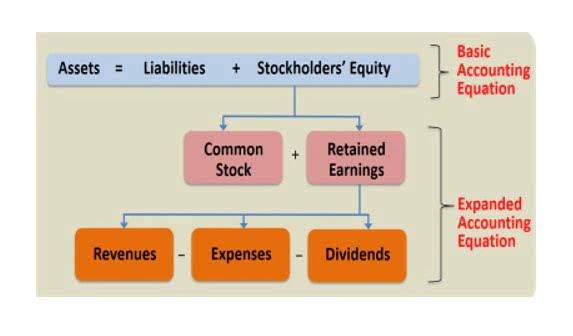
The balance sheet

Assume that a mechanic performs a tune-up on a client’s car on May 29, and the customer picks up her car and pays the mechanic $100 on June 2. If the mechanic were using the cash method, the revenue would be recognized on June 2, the date of payment, and any expenses would be recognized when paid. In the Statement of Owner’s Equity discussion, you learned that equity (or net assets) refers to book value or net a statement that shows the relationship between an individuals assets, liabilities, and equity. worth. In our example, Chris’s Landscaping, we determined that Chris had $250 worth of equity in her company at the end of the first month (see Figure 2.2).